Curation
I like to think of my curatorial work as collaboratively engaged praxis deeply rooted in relationships with people. This means actively creating platforms where artists, communities, and institutions can engage in meaningful dialog about contemporary issues and ideas. This is about more than displaying art; but a continuous process of self-awareness and engagement with the curatorial process itself and holding accountability to the communities exhibitions serve, both locally and internationally.
My goal is to create resonant exhibitions that connect emotionally and sensorially with viewers—what I believe holds the potential to nurture empathy and critical self-reflection.
Drawing from my work with artists navigating complex institutional histories, I’ve developed a practice that deeply engages ethical frameworks and reciprocal relationships built on trust. Whether the setting is a museum, university art gallery, or research-led residency, my focus remains on curating exhibitions and developing programming that actively engage art's contemporary sociopolitical, institutional, and ideological contexts. I find it important to make people’s lived experiences and expressions accessible without diminishing their inherent authenticity, richness, or power.
As you explore some of the curatorial projects I’ve been involved with below, you'll see some of this engaged principle in action. Each project commits to amplifying critical dialogs and creating meaningful encounters.
Among All These Tundras
Leonard & Bina Ellen University Art Gallery
Concordia University
Montreal, Quebec, Canada
Nov 10, 2018 – March 12, 2023
-
Link to the catalogue
-
A small response piece I wrote on the exhibition’s performance programming
-
Here is a link to the exhibition’s venue Pātaka Art + Museum in Porirua, New Zealand and a local review in the Pantograph Punch
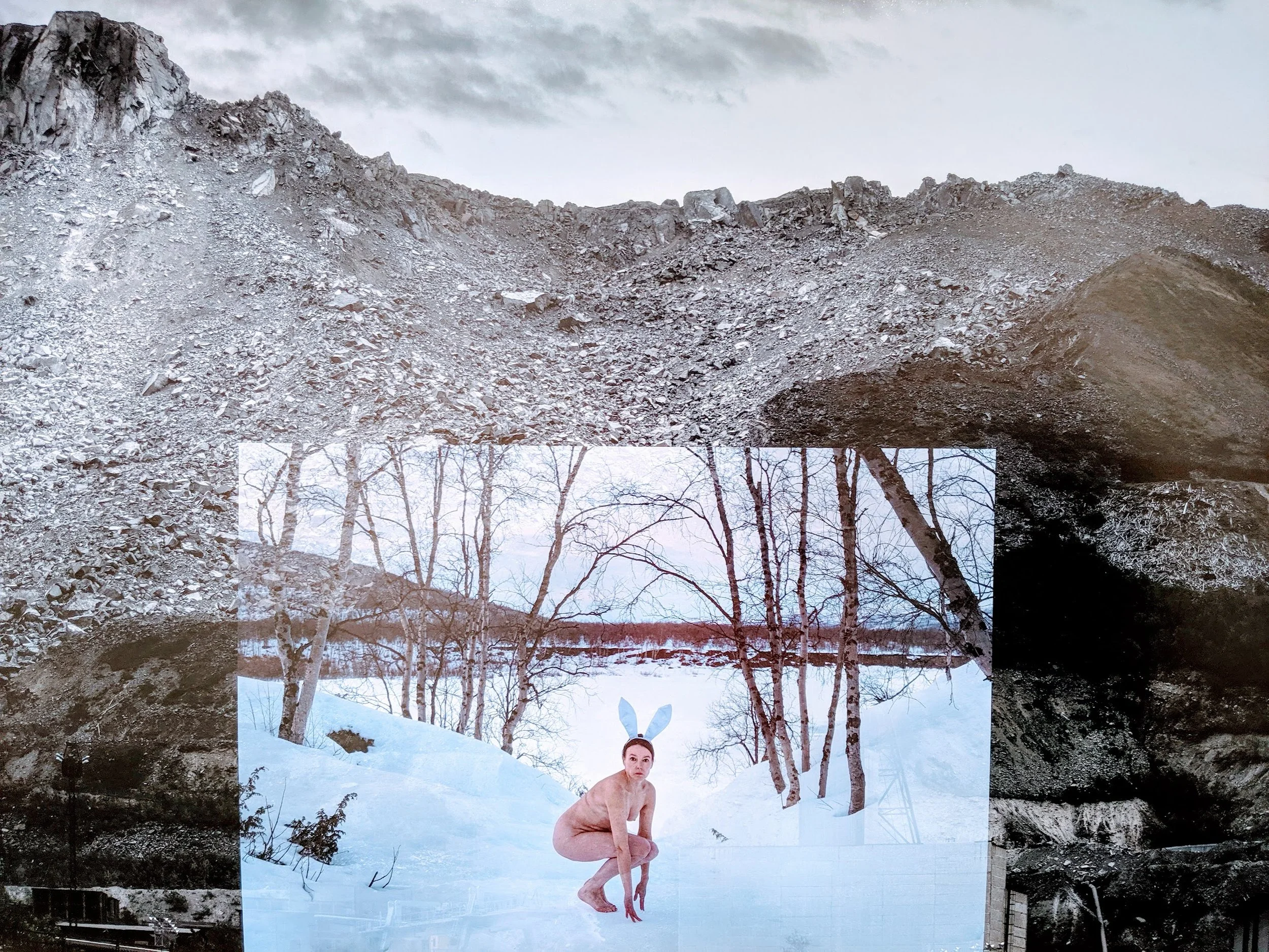
I co-curated Among All These Tundras, a trilingual touring exhibition, with Heather Igloliorte and Amy Prouty, one of the first international exhibitions exclusively featuring Inuit and Sámi artists together in North America. This groundbreaking show traveled through university galleries across Canada and to New Zealand, amplifying artistic voices from regions underrepresented in art historical discourse and scholarship.
Centered on place-based poetics and land sovereignty, the exhibition provided a platform for artists to express profound connections to homeland and cultural knowledge. The university gallery successfully facilitated a diverse range of experimental installations, including a variety of semi-immersive viewing rooms and thoughtfully designed listening stations, all of which activated the gallery space and enhanced the overall experience for visitors. Beyond the gallery walls, we developed programming that extended these conversations—gallery tours that connected visitors directly to the artists' intentions, radio features that brought circumpolar perspectives to broader audiences, and artist talks that created intimate spaces for dialogue between communities and creators.
I integrated this exhibition into my first self-designed course at Concordia University, demonstrating how curatorial practice can make complex Indigenous and decolonial theories accessible and meaningful. Teaching alongside the exhibition revealed how programming—whether through public talks, educational initiatives, or media engagement—becomes a crucial extension of curatorial work, creating multiple entry points for understanding. This approach revealed how artistic expressions embody deep relationships to land, language, and cultural systems rather than existing as isolated art objects.
The exhibition fostered lasting connections between Inuit and Sámi communities, directly leading to subsequent collaborations like the Canadian Center for Architecture’s, ᐊᖏᕐᕋᒧᑦ / Ruovttu Guvlui/Towards Home (2022). Through performances, poetry readings, and public talks, we expanded the exhibition's frame and social context, transforming the gallery into a gathering place for circumpolar dialogue. This experience refined my approach to creating platforms that balance intellectual rigor with accessibility while honoring specific cultural contexts.




ᑐᓴᕐᓂᑐᑦ TUSARNITUT!
Music Born of the Cold
Montreal Museum of Fine Arts
Montreal, Quebec, Canada
Nov 10, 2022 – March 12, 2023
-
Here’s a link to the exhibition’s iteration at the Royal Ontario Museum of Art (ROM) in Toronto, Canada
-
Here are some press clippings including write-up by the Wall Street Journal and the Montreal Gazette following our collaborative press tour.
I served as Associate Curator for Tusarnitut! Music Born of the Cold, an interdisciplinary and trilingual exhibition (English, French, Inuktitut) co-curated by Inuk curator Lisa Koperqualuk and Prof. Emeritus Jean-Jacques Nattiez. The exhibition focused on Inuit music—practices once suppressed by colonial policies. Drawing on Nattiez's extensive ethnomusicological research and personal archives, the exhibition explored two major genres of Inuit music—qilaujaqtuq (drum dancing) and katajjaq, (throat singing) —through audio and video recordings alongside over 200 works of visual art representing Inuit musicians, dancers, singers, angakkuniq (shamanic) rituals, and scenes of daily life. The exhibit channeled music's connection to contemporary Inuit visual art, highlighting living practices that confront colonial erasures through multisensory experience.
My role focused on integrating contemporary artworks, developing exhibition texts that centered Inuit perspectives and lived experience, and coordinating programming initiatives to ensure resonance with Montreal's urban Inuit community. Working across Exhibition Production, Programming, and Education departments, I helped develop public engagement that extended the exhibition's emphasis on Inuit cultural sovereignty through performances, artist talks, and guided tours.
This project involved navigating the challenging tension between ethnomusicological research frameworks and Inuit perspectives—working to center Inuit experience while operating within institutional and academic structures. Through developing exhibition texts and coordinating across departments, I learned about the complexities of collaborative work where different knowledge systems and institutional demands don't always align easily. However, Tusarnitut! contributed to a broader transformation at the MMFA, which subsequently hired Inuk curator asinnajaq and reconceptualized the permanent Inuit collection through ᐆᒻᒪᖁᑎᒃ uummaqutik: essence of life—the first Inuit-curated installation at the museum. While my involvement was specifically with Tusarnitut!, I'm proud that this exhibition contributed to creating conditions for broader change at the MMFA. Below is some of my own photographic documentation.


Various
Research-Based Curatorial Projects
Ethnocultural Art Histories Research Group (EAHR)
Montreal, Quebec, Canada
Sept 2015 - April 2016
-
Explore the Asian Canadian and Black Canadian catalogues produced through EAHR@Artexte's archival research initiative. These publications document our collective findings and public dissemination efforts.
-
Here is a link to the exhibition catalogue for Dissonant Integrations with an included segment I co-wrote on the film program.
The following collaborative projects undertaken during my graduate studies were formative in shaping my curatorial path, demonstrating my commitment to uncovering overlooked histories and practices within art historical archives. Through individual and collective research with the Ethnocultural Art Histories Research Group, I worked with my colleagues to develop inclusive frameworks and disseminate knowledge that engages with the complex cultural identities and diverse perspectives shaping contemporary art discourse.
EAHR @ ARTEXTE: Uncovering Asian Canadian and Black Canadian Art Production
Research Residency & Exhibition
Artexte & Concordia University, 2015-2016During EAHR's first research residency at Artexte, I helped develop two alternating exhibitions, comprehensive bibliographies, and a catalogue publication. Our work focused on increasing visibility for Asian Canadian and Black Canadian artists who have been historically underrepresented in Canada's art scene. The project examined how artists from these communities have challenged misrepresentations in visual culture while highlighting ongoing resistance against racial stereotypes. This collaboration between Artexte and Concordia created valuable research resources while providing exhibition platforms for underrecognized artistic voices.
Dissonant Integrations
Exhibition & Film Program
Z Art Space, 2015As part of EAHR, I co-curated this exhibition at Z Art Space with special focus on developing the "Dissonant Poetics" film program. I selected video works by five Montreal-based artists exploring themes of migration, cultural translation, and diasporic identity. Our program challenged conventional narratives about cultural belonging through works that used experimental approaches to language and representation. The accompanying essay, "Dissonant Poetics of Translation in 5 Acts: When the Language Doesn't Fit," provided critical context for understanding how these artists navigate complex cross-cultural experiences through their practice.
Re-reading Cosmopolitanism
Curatorial Residency
L’Artothéque, 2015During this residency with L'Artothèque in Montreal, I collaborated with graduate colleagues from EAHR and Diversité artistique Montréal (DAM), an organization dedicated to supporting immigrant and racialized artists. Together, we reimagined an existing exhibition, researching the collection and creating a fresh interpretation of works by thirteen Montreal artists from ten countries including Lebanon, Iran, Turkey, Cuba, and Haiti. I helped manage the installation and organized public programming that culminated in workshops, roundtable discussions, and special events during Montreal's Journées de la Culture.


